01 / Hub with display
Orbian Hub
Talk to your home. Or touch it.
The heart of your home: a display, a speaker and Orbi, bringing lights, climate, shades and alerts together in one place.
Explore and configure ↗Talk to Orbi, tap a screen or flip a switch. A family of devices that brings everyday life together: light, temperature, access and peace of mind.
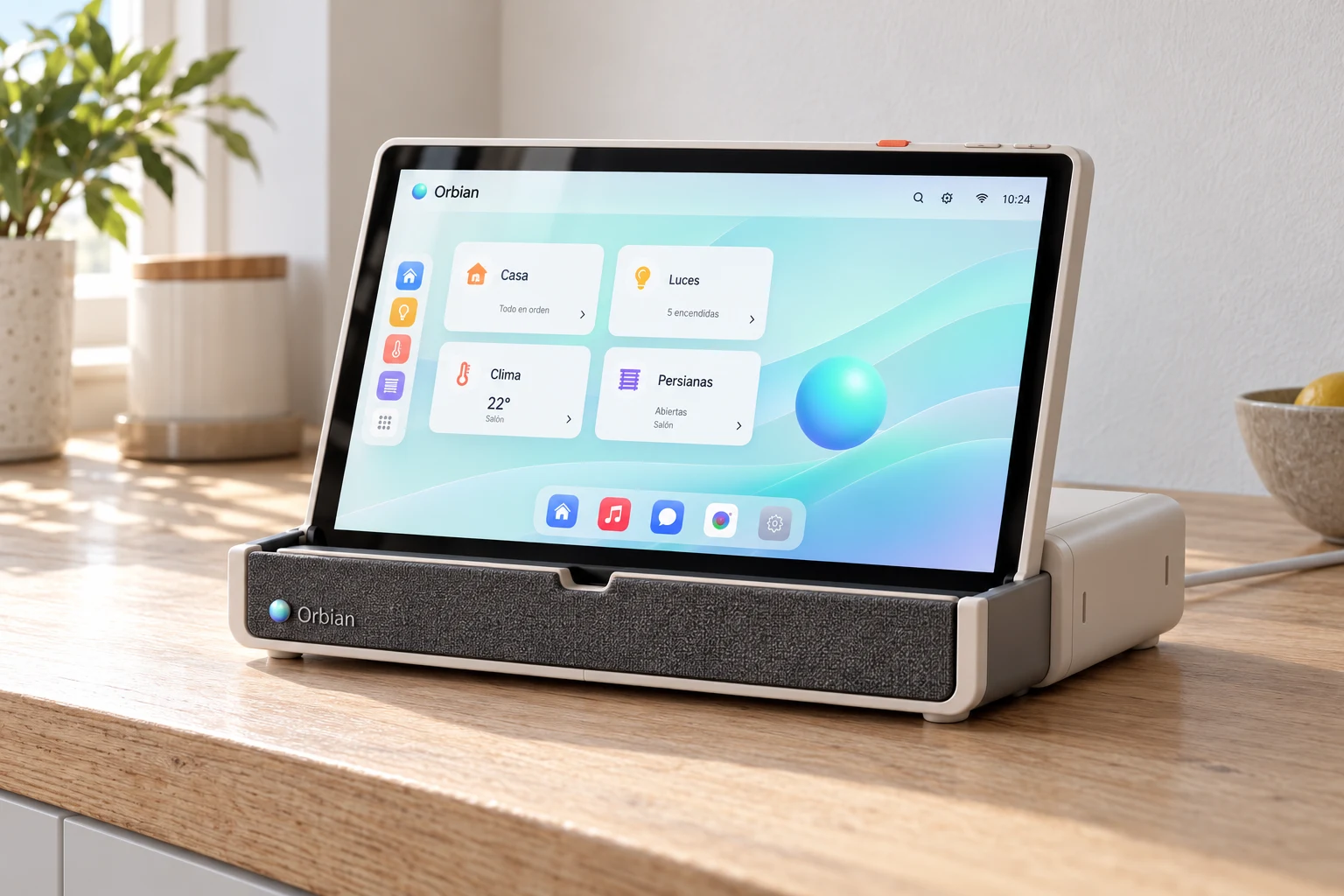
Range in development · Concept designs and images generated with AI. Sales and reservations not yet open.
Hub brings control, voice and scenes together on one screen. Sensors report events, modules act, and cameras and the mirror join when you need them. Server Home is an optional add-on for more storage or compute.
Meet Orbian Hub ↗Explore Server Home ↗Ten products and families, with specific variants. Start with what you use every day and grow room by room, without filling your home with hubs.
Talk to your home. Or touch it.
The heart of your home: a display, a speaker and Orbi, bringing lights, climate, shades and alerts together in one place.
Explore and configure ↗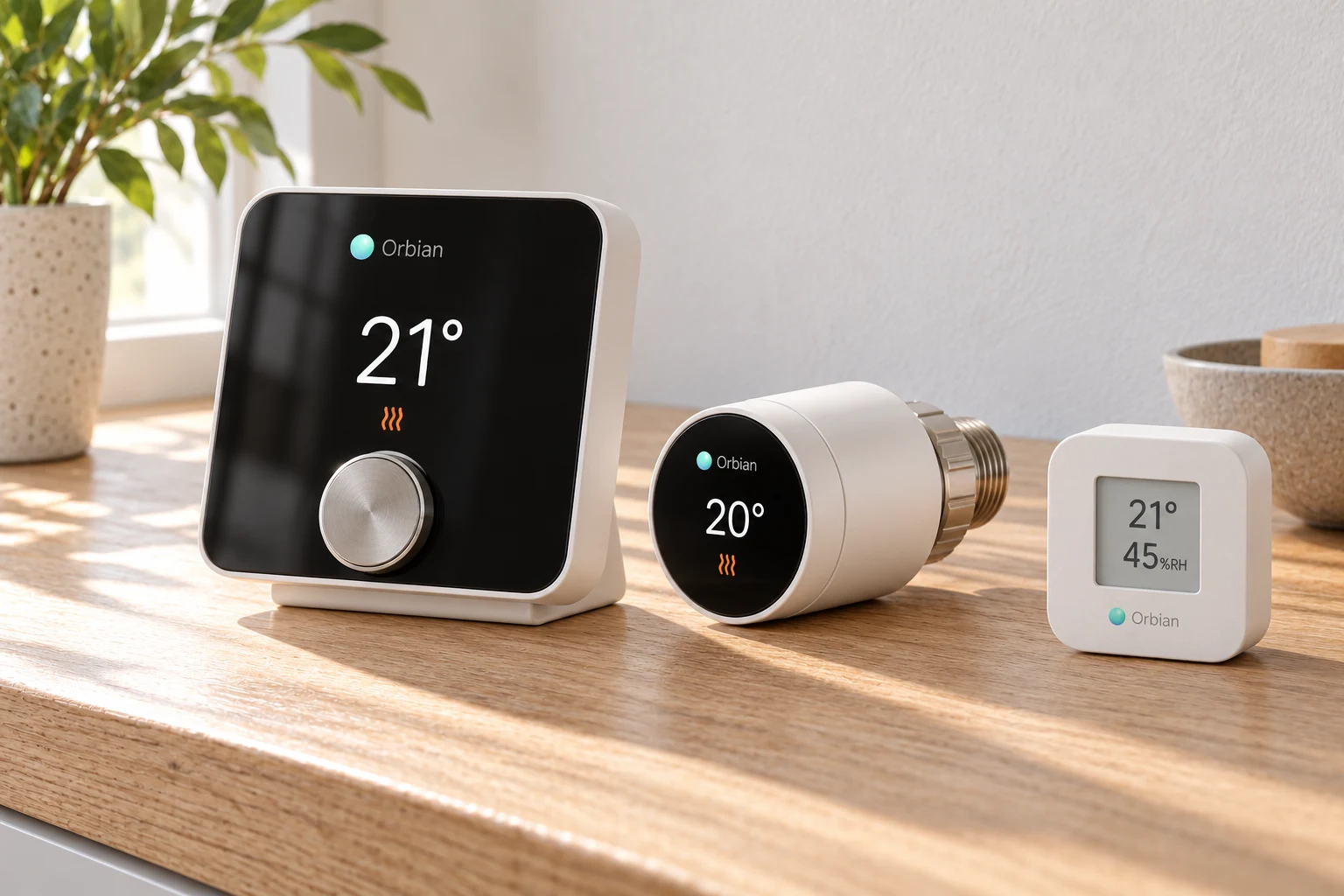
Every room at its own temperature.
A family of thermostat, radiator head and room sensor, adapted to your home’s heating and cooling system.
Explore and configure ↗Your home, on glass too.
A mirror with a built-in display or a dedicated glass panel, custom-designed as a window into your Orbian home.
Explore and configure ↗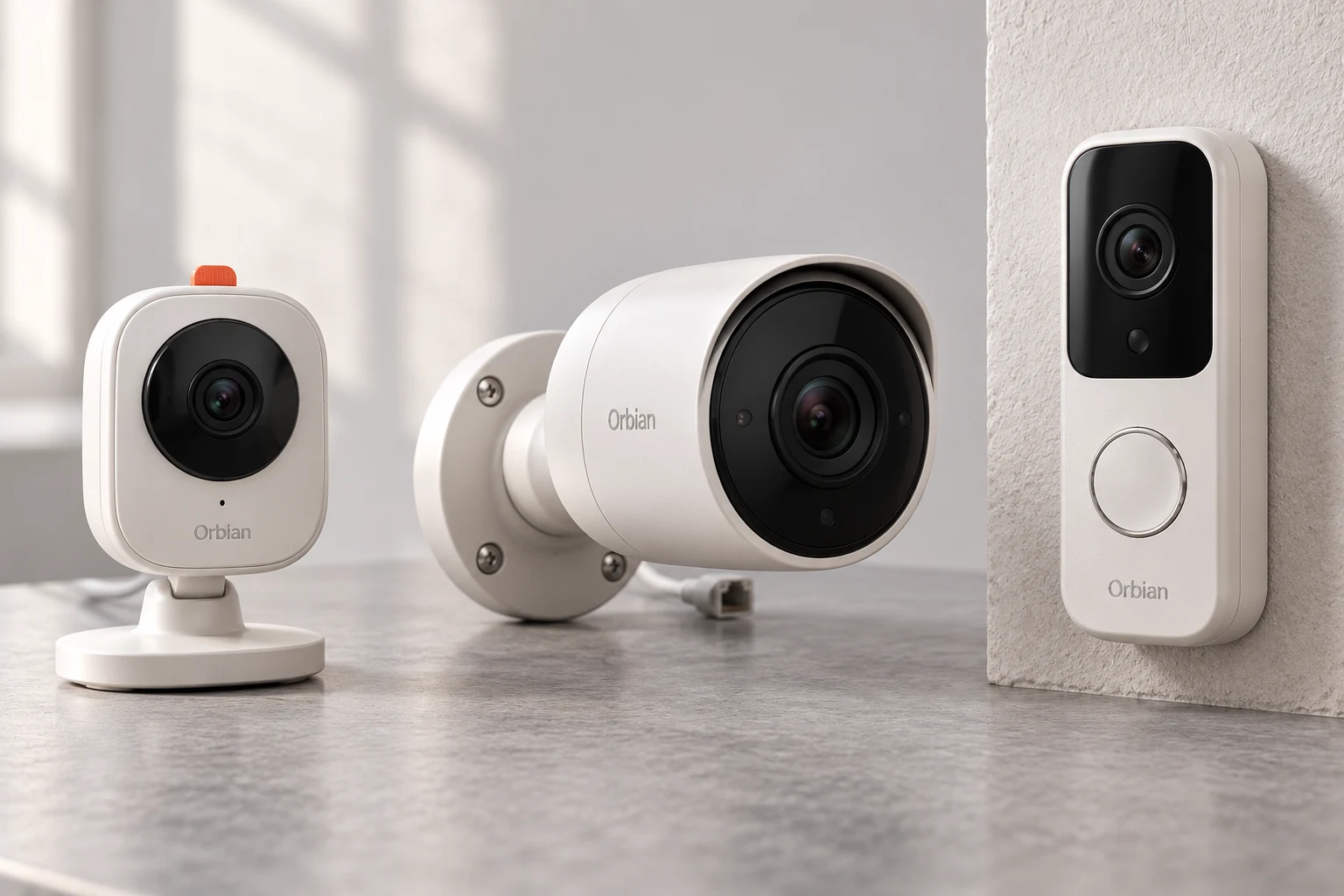
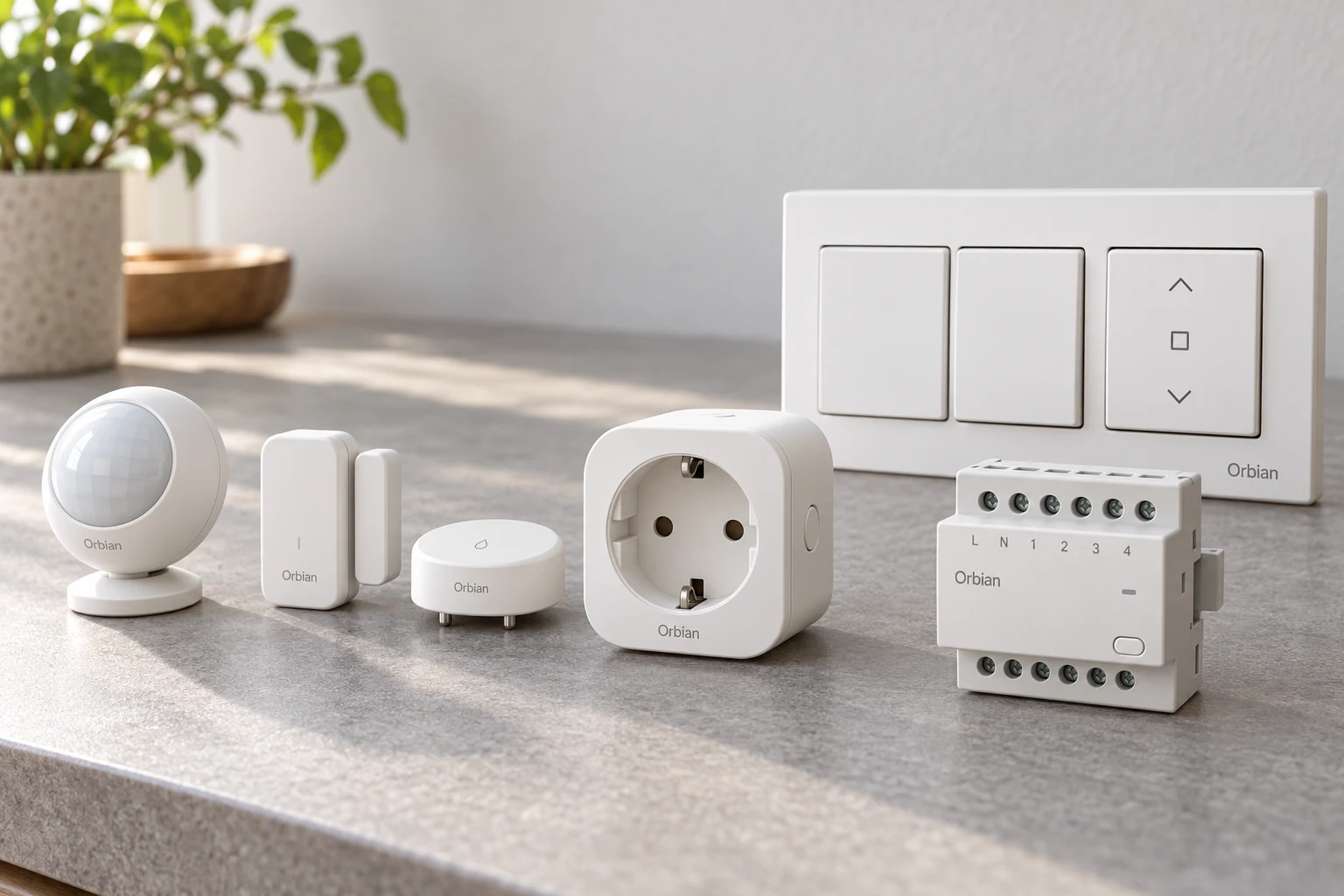
Presence can turn on the entrance light. The time and conditions of the scene are set with you.
A scene can turn off the lights you choose and lower the climate setpoint. Shades, for now, use their own control: Orbi doesn’t move them.
Door can bring the call to the Hub. Orbi never opens the door: only you, with your PIN.
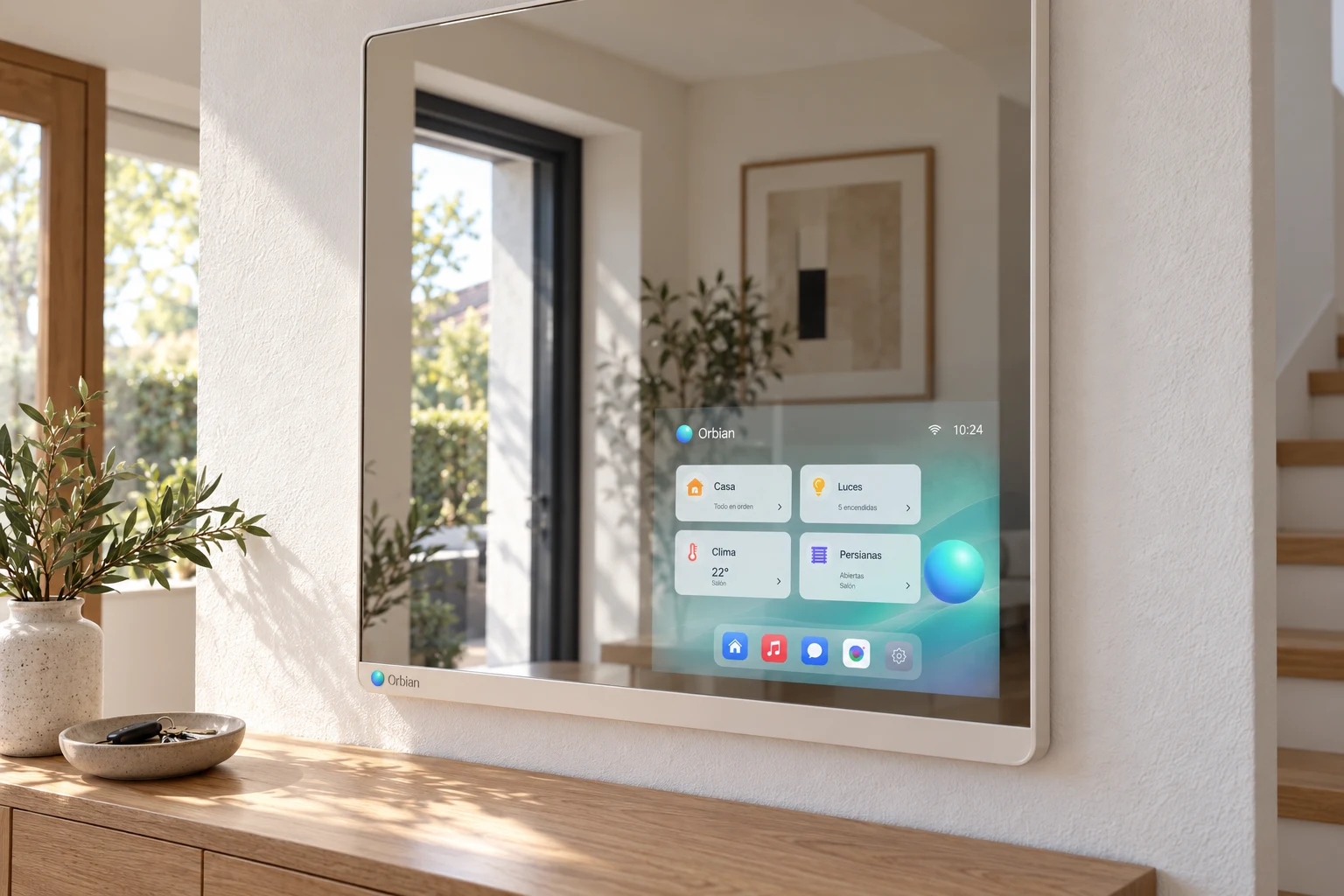
Mirror builds a screen area into a mirror; Glass proposes a dedicated glass panel. Both are surfaces connected to the same hub, custom-designed and with access for maintenance.
Design your surface ↗We propose a physical microphone switch on Hub. Local features and external providers are kept separate in the settings.
Presence doesn’t need video. If you choose video, you set the rooms, zones, permissions and how long to keep it.
The lighting, shade and climate proposals keep physical controls. Behaviour during failures is validated with each installation.
Choose your rooms and what goes in each one. The floor plan draws itself as you go and, when you like it, you request a quote with that selection.
The starting point is devices with local control and documented interfaces. The compatibility list will be built with specific models: sharing a protocol doesn’t guarantee every feature.
Matter isn’t a radio. Matter devices over Thread need a compatible border router; it’s selected and configured for the project.
Zigbee devices need their coordinator and integration. The radio isn’t assumed to be included in every Hub variant.
ONVIF and RTSP are interfaces to evaluate for the cameras. Codec, events, audio and recording are tested model by model.
Technical references: Matter and Thread in Home Assistant · ONVIF integration. These are design references, not certifications of Orbian products.
Hub and the surfaces with a screen offer the Orbian OS experience. Cameras, sensors and actuators use dedicated firmware and integrate with the hub; they don’t carry a full desktop.
Not in every case. It’s added if the number of cameras, retention or local models need more storage or compute than the chosen Hub.
No. The proposal covers home control and alerts. It isn’t presented as a certified alarm, fire detection or people monitoring system.
Not yet. You can prepare and download your setup. Hardware, integrations, price and terms will be confirmed before sales open.

Automated guide
Popular topics
This chat does not send or store your messages. Please do not include personal data.