
01 / Home help prototype
Orbian Home
Orbi, with a hand to help you.
A concept for a mobile robot with two arms and Orbian OS to explore useful household tasks, starting with simple, supervised actions.
Explore the proposal ↗One proposal for your home. Another for your desk. And a mini robot that explores movement. Three experiences with Orbian’s identity and permissions.
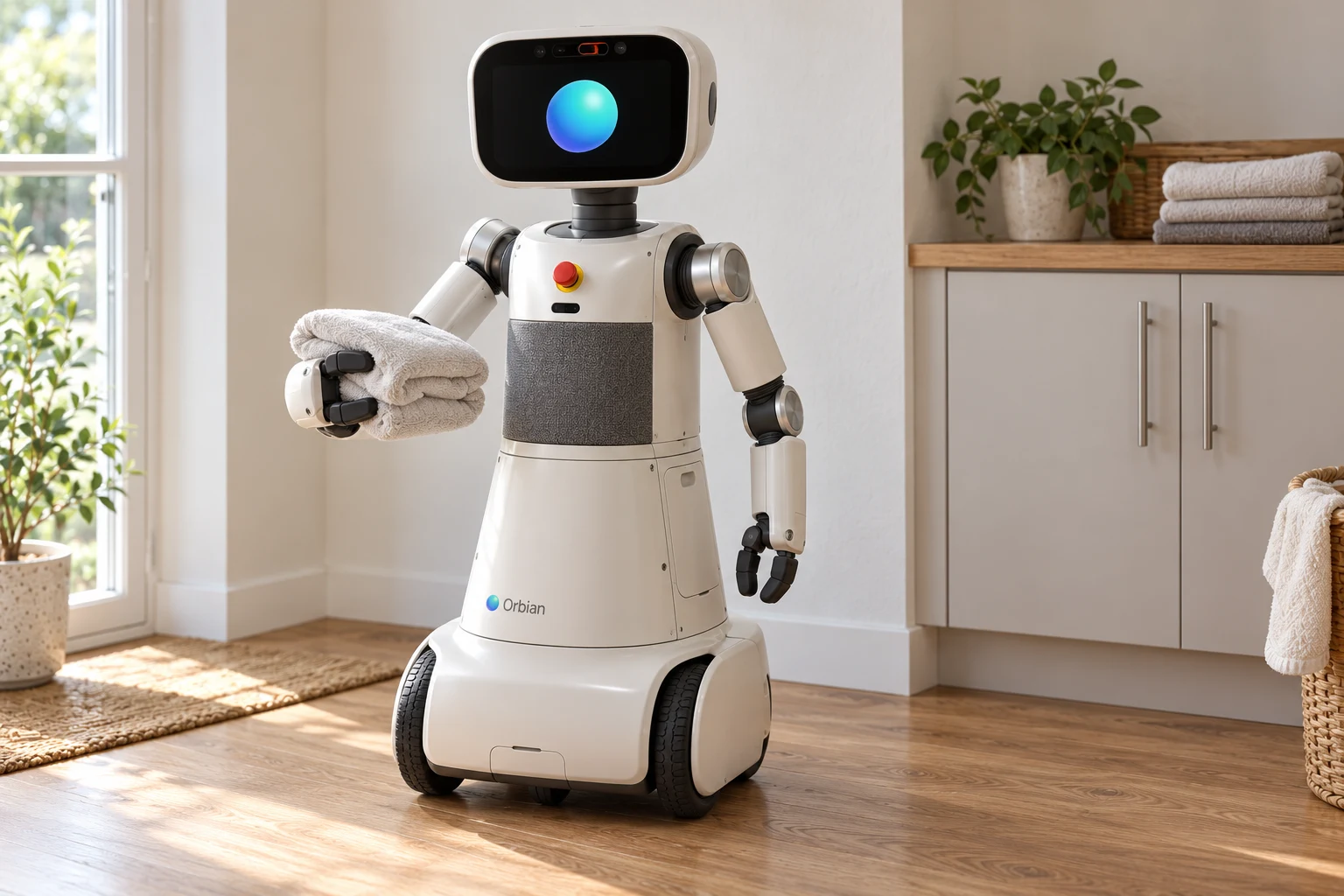
Concepts in research · Images generated with AI. No manufactured and validated robots, sales, reservations or delivery dates.
Orbi, with a hand to help you.
A concept for a mobile robot with two arms and Orbian OS to explore useful household tasks, starting with simple, supervised actions.
Explore the proposal ↗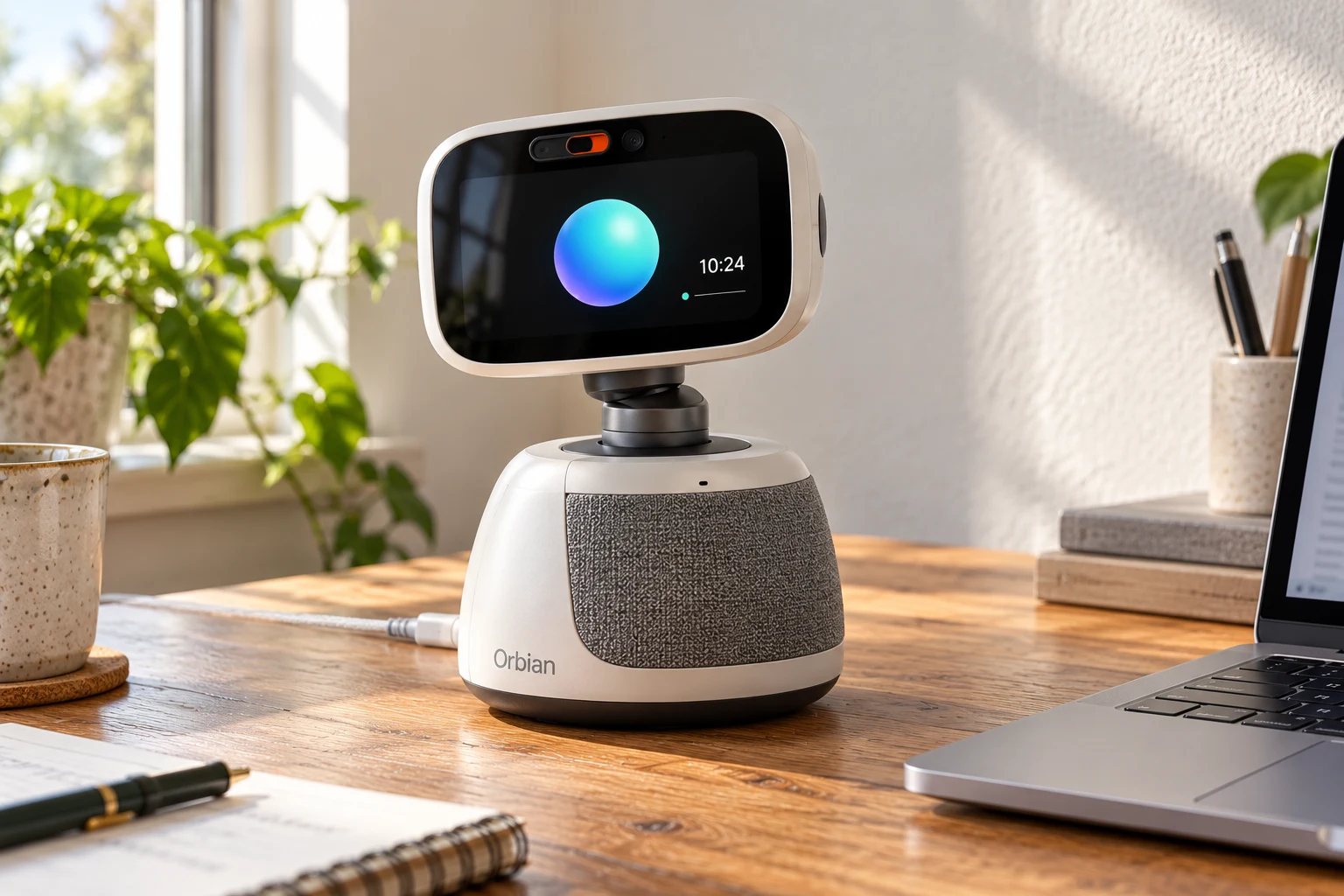
Your Orbi. Right here.
A physical tabletop assistant with a movable head, display and voice. An access point to your tasks, your apps and your home’s scenes.
Explore the proposal ↗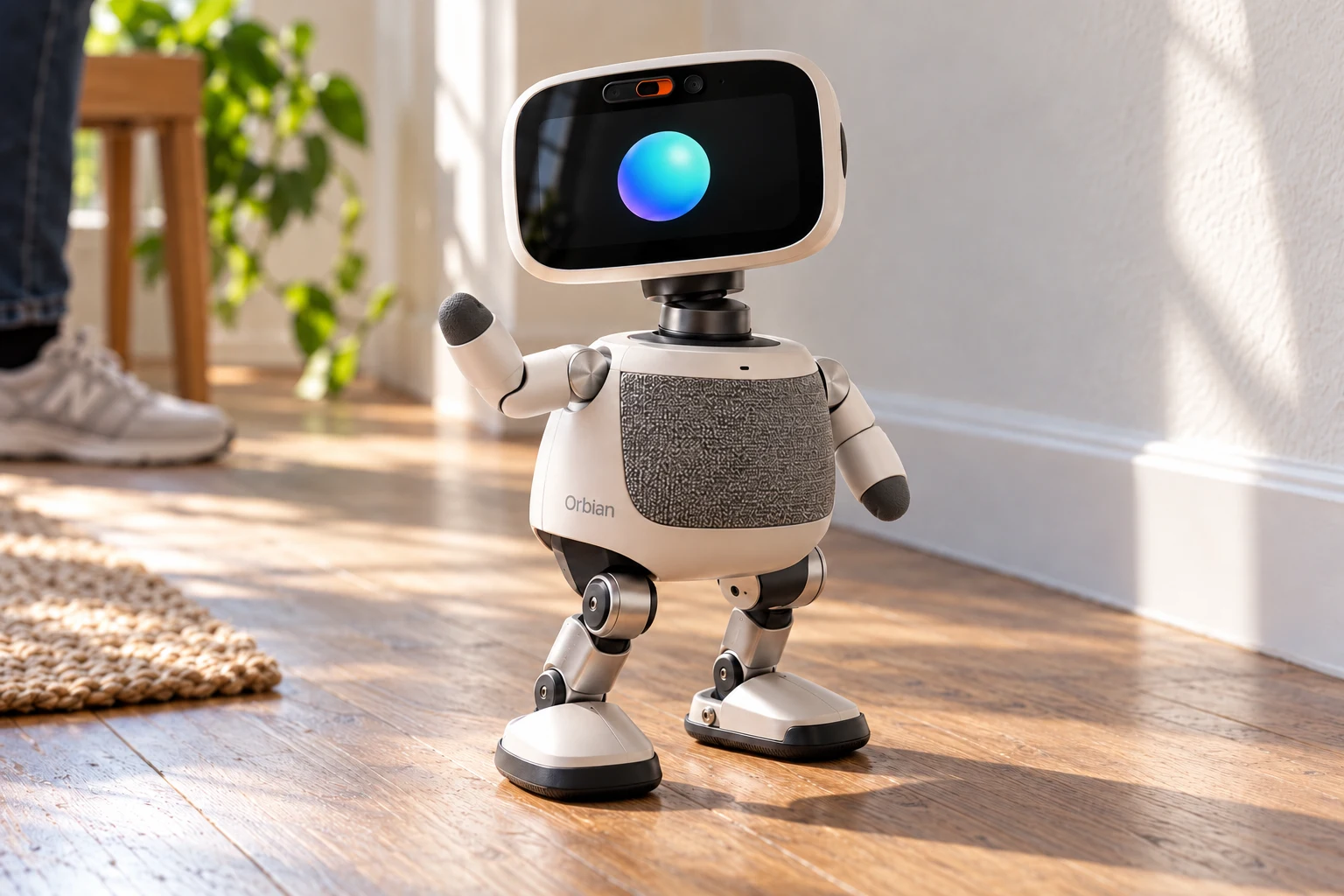
Small. Curious. On the move.
A concept for a physical mini robot with two legs, small expressive arms and Orbi. Designed to explore steps, gestures and interaction in a prepared space.
Explore the proposal ↗Every skill starts with an environment and test criteria. Household ambition is not the same as proven general autonomy.
Orbian OS and Orbi are the proposed interaction layer. Motion controllers, where they exist, keep their own limits and stop.
Your authorised apps and integrations can follow you across experiences. Each feature must be implemented and validated for its device.
Two legs, a swivelling head and Orbian’s identity. Mini sets out to explore balance, gestures and conversation in a small format, with skills developed and tested one by one.
Meet Orbian Mini ↗Environment, objects, permissions and expected result.
Components, interaction, failures and recovery; movement only on a supervised prototype.
Publish the scope, limitations and pilot conditions. Today we offer no proven general capability and no dates.
The research uses public references; Orbian is not affiliated with the manufacturers studied. There are no comparative tests of superiority.

Automated guide
Popular topics
This chat does not send or store your messages. Please do not include personal data.